
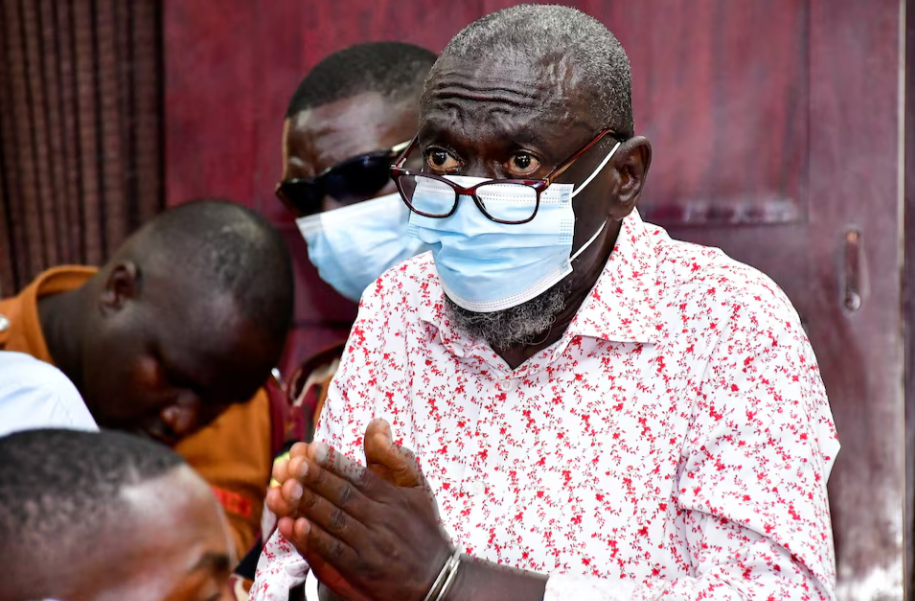
Veteran opposition politician and four-time presidential candidate Dr. Kizza Besigye collapsed in the dock Thursday after a heated protest over what he described as persistent violations of his constitutional right to a fair trial, dramatically interrupting proceedings in his treason case before the High Court.
The incident occurred shortly after Justice Emmanuel Baguma ruled that the trial would proceed with three court-appointed lawyers representing Besigye and his co-accused despite their objections. Besigye repeatedly argued that the court could not lawfully proceed before resolving a pending application concerning his legal representation.
"How can I proceed without representation?" Besigye shouted before banging on the dock. "We shall not allow this trial to proceed."
Moments later, he collapsed, prompting court officials and medical personnel to rush to his aid before he was evacuated by ambulance. Reports indicated he was transferred to Mulago National Referral Hospital after initially being taken to Luzira.
The courtroom incident marked the latest flashpoint in a long-running dispute over the conduct of the case, with Besigye maintaining that the prosecution has repeatedly undermined his constitutional right to counsel of his own choosing.
Besigye's legal team withdrew from his case following intimidations and arrests. Counsel Erias Lukwago who was the led his legal team was arrested and charged with misprision of treason in relationship to Besigye's treason case, while Kenyan lawyer Martha Karua, who had joined his defense team, was denied entry into Uganda, deported and declared persona non grata by the government. Other members of his legal team have also withdrawn from the case, citing intimidation.
The government has not accepted allegations that it deliberately interfered with Besigye's legal representation. Prosecutors instead argued that because the case involves capital offences, the Constitution requires the accused to have legal representation and that the court was justified in appointing lawyers after Besigye declined to work with those assigned to him.
Justice Baguma ruled that the constitutional requirement for representation in capital cases outweighed the objections raised by the accused. While acknowledging that Besigye remains free to retain lawyers of his own choosing at any stage of the proceedings, the judge found no legal basis to delay the trial and directed that the court-appointed advocates remain on the case.
Besigye, however, argued that his pending application challenging the appointment of state-funded lawyers should have been determined before the trial commenced, insisting that the proceedings could not be fair while that issue remained unresolved.
The hearing was adjourned following Besigye's collapse, leaving uncertainty over when the trial will resume.