
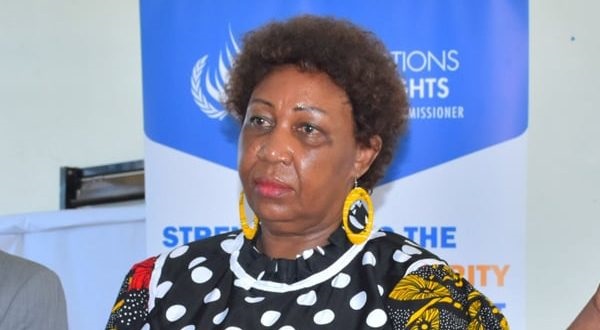
Former Uganda Human Rights Commission (UHRC) Chairperson Mariam Wangadya has resigned from her position following months of mounting pressure, public criticism and internal disputes within the commission. Her resignation comes after fellow commissioners accused her of misconduct, abuse of office and mismanagement of the commission's funds.
The resignation followed a petition submitted to President Yoweri Museveni and the Inspector General of Government by fellow commissioners Simeo Nsubuga, Retired Col. Stephen Basaliza and Jackie Atuhaire Rwabukurukuru. The commissioners accused Wangadya of misconduct, abuse of office and misallocation of the commission's resources.
However, Wangadya dismissed the allegations, insisting they were baseless and driven by jealousy aimed at tarnishing her reputation.
"I have been clearly stating that the Uganda Human Rights Commission is one of the poorest organisations. There is no money to steal in this organisation," she said while defending herself against the accusations.
She also revealed that the sustained attacks had taken a heavy personal toll.
"I have been highly disrespected. They have abused me, and my entire family is under tension. They do this all day, all the time," Wangadya said.
Before her resignation, Wangadya had warned that she would step down if the situation within the commission did not improve. She also expressed concerns about her personal safety, alleging that some individuals were plotting to kill her.
While addressing the media, Wangadya claimed that several National Resistance Movement (NRM) Members of Parliament whom she had testified against in corruption-related cases had become hostile toward her after receiving presidential pardons. She specifically mentioned Hon. Cissy Namuju, Hon. Yusuf Mutembuli and Hon. Paul Akamba, alleging that they were seeking revenge against her because of her role in the investigations.
Wangadya further criticised the manner in which appointments to the Uganda Human Rights Commission are made. She accused President Museveni of undermining the institution by turning it into what she described as a "dumping ground" for politicians who had failed elsewhere or were seeking political appointments. According to her, some commissioners lacked the competence and qualifications required to effectively carry out the commission's mandate.
Throughout her tenure since 2021, Wangadya's leadership attracted criticism from opposition political parties and human rights activists. The National Unity Platform (NUP) publicly withdrew its confidence in the commission, accusing it of lacking independence and impartiality.
During one of its appearances before the commission, an opposition representative stated:
"I am here to withdraw my complaint to this commission because it lacks impartiality and independence to fairly hear this case."
Wangadya also faced criticism from civil society groups and opposition leaders who accused the commission of failing to act decisively on allegations of abductions, enforced disappearances and other human rights violations involving opposition supporters. Critics argued that the commission remained largely silent on some of the country's most contentious human rights cases, raising concerns about its effectiveness and independence.
Her resignation marks the end of a turbulent tenure that was characterised by internal conflicts, political criticism and growing public scrutiny over the commission's role in protecting human rights in Uganda.