
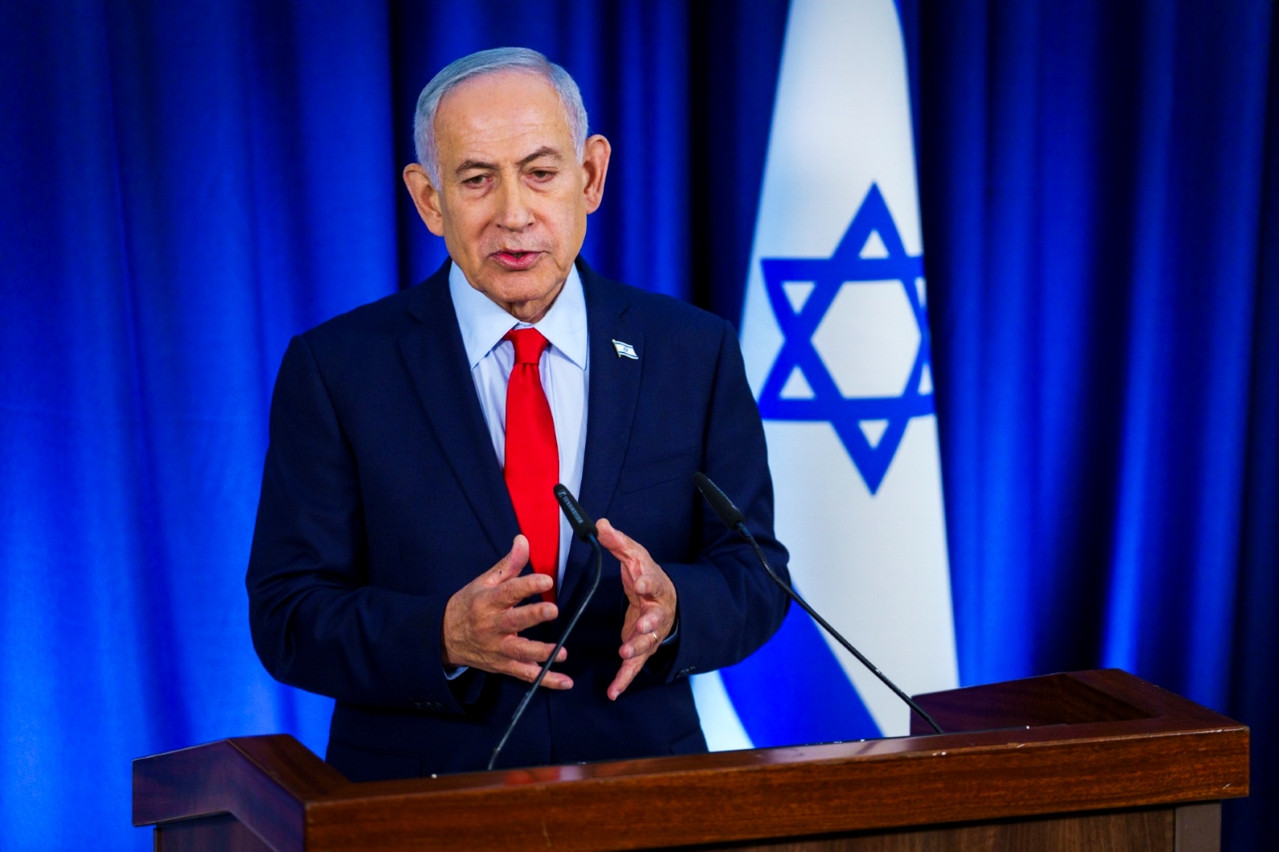
During the JNS International Policy Summit Israel Prime Minister Benjamin Netanyahu , has defended his government’s military strategy across multiple regional fronts, insisting that Israel’s recent operations against Iran, Hezbollah, and Hamas were necessary to secure the country’s survival and reshape the regional security landscape.
In his speach, Netanyahu rejected claims that Israel acts under external influence, particularly from the United States. “We’re leaders of independent and proud countries. We stand for our interests,” he said, adding that while Israel and its allies “often see eye to eye,” disagreements do occur.
The Prime Minister highlighted a series of military operations, arguing they were critical in preventing what he described as existential threats. He claimed that Israeli and U.S. cooperation had enabled major strikes on Iran’s nuclear infrastructure, significantly weakening its capabilities. According to Netanyahu, these actions prevented Tehran from acquiring nuclear weapons, which he warned would have been used against Israel.
He further asserted that Israeli operations had eliminated about tweenty (20)senior Iranian nuclear scientists and severely damaged the country’s military infrastructure, including missile systems, air defenses, and naval assets. Netanyahu said the cumulative economic impact on Iran’s Revolutionary Guard Corps amounted to “hundreds of billions of dollars.”
Turning to Lebanon, Netanyahu said Israel had “decimated Hezbollah’s military machine,” including destroying a large portion of its missile arsenal and eliminating key leadership figures. He also referenced covert operations and long-standing intelligence efforts aimed at weakening the Iran-backed group.
The Prime Minister also claimed Israel had established “security zones” in Gaza, Syria, and southern Lebanon, saying these measures would remain in place as long as necessary to protect Israeli citizens. “We will keep them as long as it is necessary,” he said.
Netanyahu strongly reiterated Israel’s stance on Iran’s nuclear ambitions, declaring, “Iran will never have a nuclear weapon. Never as long as I am Prime Minister.”
He also framed the military campaign as a psychological turning point, saying Israel had “broken through the barrier of fear” that previously constrained its military options, including direct action against Iran.
Despite the hardline tone, Netanyahu said he still hoped for future peace with Lebanon, but only if Hezbollah is dismantled. “We don’t have a war with Lebanon. We have a war with Hezbollah,” he said, adding that peace would be possible once the group is no longer a threat.
The speech underscores Israel’s continued reliance on military pressure as both a defensive and strategic tool, while signaling no immediate shift toward de-escalation with Iran or its regional allies.