
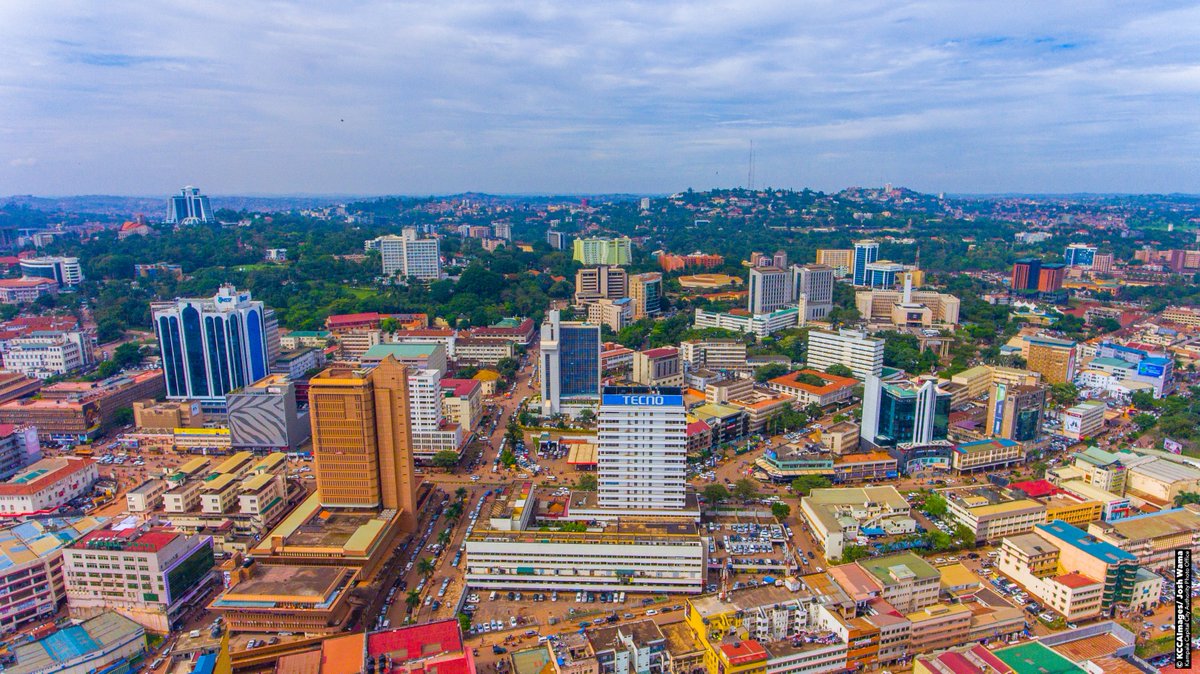
Uganda could consider shifting its capital from Kampala to a newly planned city in Nakasongola District, following a proposal by the State Minister for Urban Development, Margaret Muhanga.
Appearing before the Parliamentary Committee on Wednesday 12 August, Lands and Urban Development, Muhanga argued that Kampala's growing congestion, traffic jams and unplanned urban development have made the city increasingly difficult to manage and are undermining economic productivity.
She said traffic congestion alone costs Uganda an estimated US$1.6 billion annually, as people and businesses lose valuable time moving around the capital.
“Trying to redeem Kampala is impossible. This place is irredeemable,” Muhanga told the committee.
She further described Kampala as increasingly unlivable and difficult to reorganise, arguing that the government should consider developing a new capital city from scratch rather than continuing to expand and rehabilitate the existing urban area.
Muhanga said the government should not necessarily choose from among the 10 cities that were upgraded to city status in recent years, as some of them have already experienced unplanned development.
Instead, she proposed identifying a suitable location where a new city could be designed and developed according to a comprehensive master plan.
“We have to create a new capital city and plan for it afresh with proper plans,” she told the committee, noting that some of the existing cities are already poorly planned.
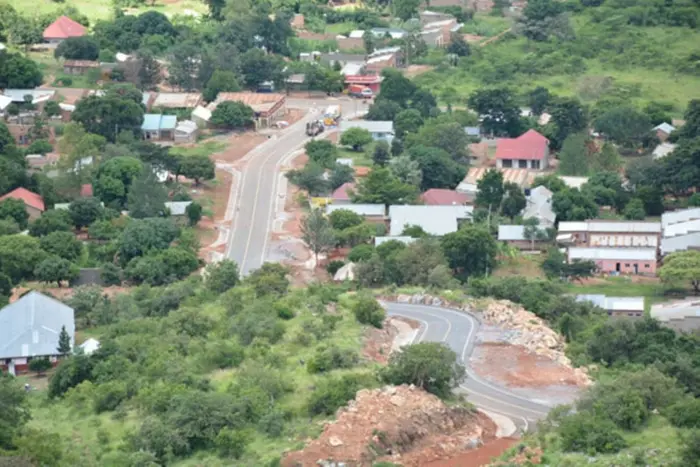
Nakasongola was suggested as a possible location because of the availability of land and its strategic geographical position in central Uganda.
“We have a lot of land in Nakasongola where we had decided to shift, and the President was so much for it that this capital shifts,” Muhanga said.
The minister acknowledged that establishing a new capital would not be an overnight undertaking. She said the project could be implemented gradually, with planning and development extending towards 2040.
She also noted that the idea is consistent with Uganda's long-term development aspirations under Vision 2040, although she suggested that the plan has not received sufficient attention in recent years.
The proposal comes as the government continues to invest in permanent infrastructure in Kampala and surrounding areas.
Muhanga pointed to recent and ongoing government construction projects, including the new Ministry of Justice and Constitutional Affairs complex in Naguru and the ongoing construction of the new Parliament building, as examples of investments that could complicate a future decision to relocate the capital.
She also told the committee that some landlords and property owners in Kampala are opposed to the idea of relocating the capital because of concerns that they could lose tenants and business opportunities if government institutions move elsewhere.
The Parliamentary Committee on Lands and Urban Development has asked the ministry to return next week with a detailed study outlining the potential advantages and disadvantages of establishing a new capital city.
The study is expected to help determine whether relocating the capital would be economically, socially and administratively viable, as well as the potential costs and long-term benefits of such a move.
If pursued, the proposal would represent one of the most ambitious urban development projects in Uganda's history, requiring extensive planning, infrastructure investment, government relocation and private-sector participation.
Background of Kampala Capital City
Kampala's history as Uganda's administrative centre dates back to the colonial period. In 1890, British colonial administrator Frederick Lugard selected Old Kampala Hill as the headquarters of the Imperial British East Africa Company.
The colonial administration later moved the administrative centre to Entebbe in 1905. Kampala was subsequently established as a municipality in 1949.
Following Uganda's independence in 1962, Kampala became the country's capital and has remained the seat of government ever since.
The latest proposal therefore raises a major question for Uganda's future: should the country continue investing in the expansion and redevelopment of Kampala, or build a new, purpose-planned capital city in Nakasongola?
The ministry's forthcoming study is expected to provide more clarity on the feasibility of the proposal.