
.jpg&w=3840&q=75)
On the morning of June 15, 2026, armed operatives from Uganda's elite Special Forces Command under orders CDF Gen. Muhoozi Kainerugaba raided Erias Lukwago, a prominent opposition lawyer and former Lord Mayor of Kampala. Neither arrest warrant court did they present. By afternoon, Gen. Kainerugaba posted on his X (former Twitter) acount celebrating the opperation carried out on Lukwago, "I have captured a fool and taken him into the basement," He also posted images of Lukwago in what the general described as "my basement." Mohoozi promised that Lukwago would face at least ten years in prison. Days later, bowing to international pressure, the military transferred Lukwago to formal police custody, and later to where he was charged with misprision of treason.
The incident was not an aberration. It was the latest chapter in a pattern of behaviour by one of Africa's most controversial military figures a sitting army chief who has turned Uganda's constitutional order upside down, operating simultaneously as a general, a politician, a social media provocateur, and, by his own account, a jailer.
The Making of a General: A Career Forged by Blood, Not Battle
General Kainerugaba, is one of the privellaged Army officers who have swiftly he acquired acquire power and authorith in the Defence forceces. His ascent through Uganda's military hierarchy has been described by analysts and former officers alike as having no equal in the country's history.
He joined the Uganda People's Defence Forces in 1999 as an officer cadet and graduated from the Royal Military Academy Sandhurst in 2000 the same prestigious British institution that has produced generations of royalty and heads of state. Within a decade, he had been appointed commander of the Special Forces Command (SFC), the UPDF's elite special operations unit, a position he held from 2008 to 2017.
He was made a Colonel in 2011, a Brigadier General in 2012 promotions arriving with an urgency that senior military observers found difficult to explain on merit alone. By 2019, he was a Lieutenant-General, and in October 2022, he was elevated to full General. By March 2024, he was appointed Chief of Defence Forces, the highest uniformed position in the Ugandan military.
Critics are blunt about what drove these promotions. "This is not a career built on battlefield distinction," one Ugandan political analyst wrote in a widely shared commentary. "It is a succession project in military uniform." The analyst was referring to what has widely become known as the "Muhoozi Project" an alleged coordinated effort by President Museveni's inner circle to position his son as the next ruler of Uganda.
The Constitution Aside: The General In Partisan Politics
Article 208(3) of Uganda's Constitution states that "the Uganda People's Defence Forces shall not be partisan, and shall not engage in partisan activities." The UPDF Act reinforces this prohibition, restricting serving military officers from participating in party politics or political activities.
General Muhoozi Kainerugaba appears to regard these provisions as simply inapplicable to him.
In February 2024, he formally rebranded what had long been called the "Muhoozi Project" into the Patriotic League of Uganda (PLU), a political pressure group of which he is chairman. The PLU actively participates in shaping Uganda's political landscape endorsing candidates for public office, mobilising voters, and publicly intervening in parliamentary affairs.
Among the most striking examples of this partisan reach was the general's endorsement of candidates for the Speakership and Deputy Speakership of Uganda's Parliament . When a serving Chief of Defence Forces publicly backs parliamentary leadership candidates, the effect is not subtle persuasion it is a command. Members of Parliament assembled behind his endorsed candidates knowing full well which direction the wind was blowing from. Political analysts noted that the endorsement effectively pre-determined the outcome of what should have been an independent parliamentary process.
Remarkably, no formal accountability measures have been followed. The Judiciary is silent about all of these. No senior official has publicly censured the CDF for these activities. The message this sends to Uganda's democratic institutions is clear: in Uganda's current political architecture, blood ties to the president constitute a form of constitutional immunity.
General's Tweets That Cause; Threats, and Public Outcry
General Kainerugaba has long been dubbed "the tweeting general" a title that captures both his compulsive use of social media and the gravity of what he posts there. His X account has become one of the most closely watched in East Africa, not for its policy insights, but for the threats, provocations, and diplomatic crises it regularly generates.
A selective but telling timeline of his posts illustrates the pattern:
October 2022: He threatened to invade Kenya and "capture Nairobi" a post so diplomatically explosive that his own father was compelled to issue a formal apology to the Kenyan government. As a direct consequence, Kainerugaba was removed from his position as Commander of Land Forces. He was reappointed CDF within eighteen months.
December 2024: He threatened to "capture Khartoum," prompting Sudan to demand an official apology before he deleted the tweets.
January 2026: Just days after his father was declared the winner of a seventh presidential term in an election that opposition groups described as a "sham," Gen. Kainerugaba posted: "We have killed 22 NUP terrorists since last week. I'm praying the 23rd is Kabobi." "Kabobi" is his mocking nickname for Robert Kyagulanyi Ssentamu, better known as Bobi Wine the leader of the National Unity Platform, Uganda's main opposition party, and a man who came second in the presidential ballot.
In the same post, Kainerugaba gave Bobi Wine a 48-hour ultimatum to "surrender himself to the Police," adding: "If he doesn't, we will treat him as an outlaw/rebel and handle him accordingly."
"We have killed 22 NUP terrorists since last week. I'm praying the 23rd is Kabobi." General Muhoozi Kainerugaba, posted on X, January 2026
On a separate occasion, he publicly stated that he had identified the specific tree from which he intended to hang Dr. Kizza Besigye Uganda's veteran opposition leader and medical doctor, who is currently held at Luzira Maximum Security Prison. The statement, made on social media by the country's highest-ranking military officer, drew condemnation from human rights organisations but, once again, no formal sanction.
The general has also threatened to arrest Joel Osenyonyi , the official Leader of Opposition in Uganda's parliament, and has warned other lawyers who have publicly criticised him. He additionally threatened to ban NTV Uganda , one of the country's leading independent television stations, after the network produced a documentary cataloguing his conduct as a public officer.
Bobi Wine's Ordeal: From Campaign Trail to Exile
Robert Kyagulanyi Ssentamu aka Bobi Wine , is a musician-turned-politician who built one of the most formidable grassroots opposition movements in Ugandan history. He ran against Museveni in the 2021 election and again in January 2026. After the 2026 results were announced, Uganda's army denied abducting him amid reports of a military raid on his compound in Magere. Bobi Wine told Al Jazeera that "it was clear that the regime wanted to eliminate me."
For weeks he remained in hiding inside Uganda. In March 2026, he left the country and went into exile a devastating symbol of the political climate General Kainerugaba and his father's administration had created. In a video message to the people of Uganda and the world, he described months of living under armed siege, with military operatives surrounding his property and his family unable to move freely.
The World Liberty Congress, an international pro-democracy body, issued a formal condemnation of the "threats made by General Muhoozi Kainerugaba" against Bobi Wine, describing the situation as an assault on Uganda's democratic processes and an abuse of military power.
The Basement. Gen. Muhoozi's Illigal Detation Facility
Before Lukwago, there was Eddie Mutwe Bobi Wine's personal bodyguard. In May 2025, Mutwe disappeared after being reportedly picked up by SFC. Days of silence followed. Then General Kainerugaba broke it himself, posting on X that Mutwe was "in my basement." He circulated photographs of the detained man and, in posts that drew widespread international condemnation, threatened castration. He stated that Mutwe would only be released on the personal orders of President Museveni.
The Uganda Human Rights Commission subsequently declared the detention unlawful. Mutwe was eventually handed over to formal police custody his head shaved, his beard removed and later remanded to Luzira prison. His photographs, distributed by the country's chief of defence forces, had been seen across the world.
The abduction of Erias Lukwago on June 15, 2026, carried the hallmarks of the Mutwe case but with even greater legal and symbolic weight. Lukwago is not merely a political activist he is a trained lawyer, a former Lord Mayor of Kampala, and at the time of his abduction he was serving as legal counsel to detained opposition figures in ongoing treason proceedings.
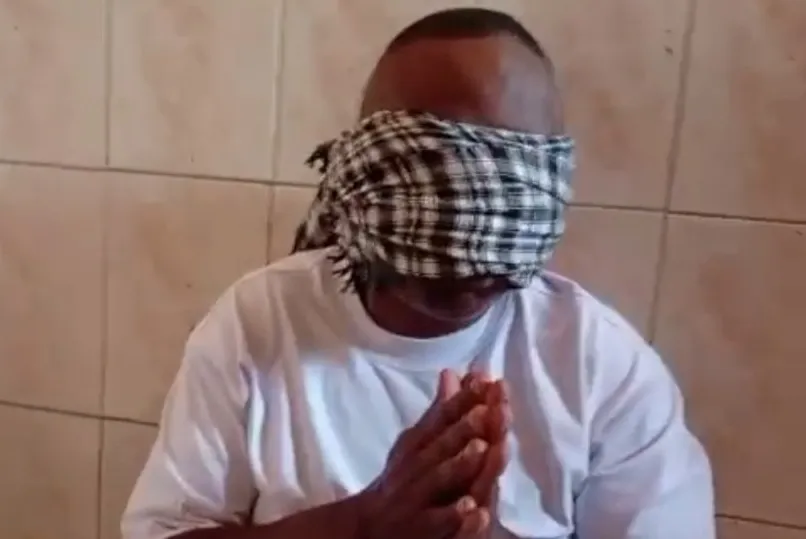
Special Forces Command operatives seized him early in the morning. Police publicly distanced themselves from the arrest, stating they had no information about his whereabouts. General Kainerugaba again posted on X, confirming the detention, sharing images from what he described as "the basement," and announcing that Lukwago would be imprisoned for a minimum of ten years.
Opposition parties united in condemnation. Bobi Wine, from exile, called it a "violent abduction." Reuters reported that Lukwago had been arrested in connection with his work defending People's Front for Freedom figures facing treason charges raising the harrowing prospect that in Uganda in 2026, providing legal representation to opposition clients is itself grounds for detention.
Under pressure from the press, human rights groups, and opposition MPs, the general eventually announced he would transfer Lukwago to formal police custody. Lukwago appeared in court days later, charged with misprision of treason.
"Opposition parties have condemned Erias Lukwago's abduction, warning that Uganda is sliding deeper into fear, impunity and the erosion of rule of law." Daily Monitor, Uganda, June 2026
The "Drone Cars" and the Architecture of Disappearance
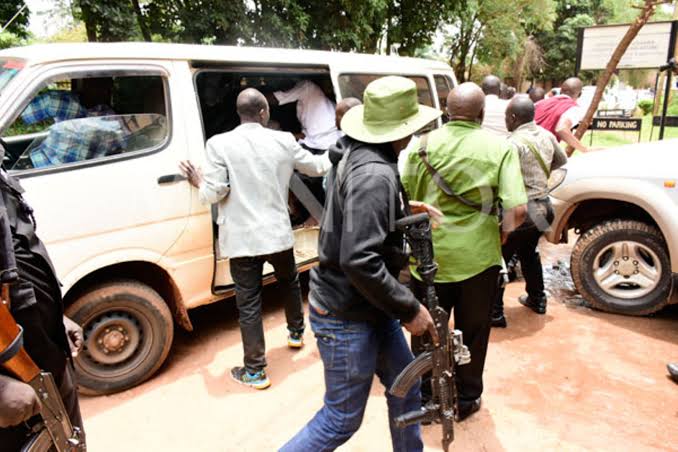
Running through all of these incidents is a consistent operational signature: abductions carried out by security personnel in unmarked vehicles known as in Uganda as "drones" or "drone cars." These vehicles, typically nondescript saloon cars with no government markings, have become synonymous with forced disappearances in the country.
The abductees are taken to locations outside the formal prison and police system locations that General Kainerugaba has himself described, without apparent embarrassment, as "the basement." There, by accounts of survivors and human rights monitors, they are subjected to conditions that constitute torture under both Ugandan law and international human rights instruments to which Uganda is a signatory.
The use of this infrastructure informal detention, extrajudicial confinement, deliberate public theatrics around captured individuals represents a departure from even the previous standards of political repression under the Museveni administration. It is repression as spectacle, designed to terrorise not just the immediate victims but the entire political opposition and civil society
Battling Journalists and Lawyers
The pattern extends well beyond politicians. In December 2021, writer and satirist Kakwenza Rukira was arrested by SFC operatives under Kainerugaba's command after posting critical comments about him on Twitter. Rukira alleged that he was tortured during detention allegations that attracted significant international attention and prompted calls from PEN International and other press-freedom organisations for an independent investigation.
Kainerugaba's threat to ban NTV Uganda, made after the broadcaster aired a documentary on his conduct, reinforced a broader pattern of intimidation directed at independent media. In a country where press freedom is already severely constrained, a public threat by the army chief to shut down a national television channel functions not merely as a statement of intent but as a warning to every journalist and outlet in the country.
Lawyers who have criticised the general's actions or defended opposition clients have similarly been threatened. The cumulative effect is a professional climate of fear in which the independent bar a cornerstone of any functioning rule of law is itself under siege.
"Muhoozi Project" The Succession Plan
Underlying all of this is the question that Ugandans across the political spectrum are asking in private and that a growing number are beginning to ask publicly: is Uganda being prepared for a dynastic transfer of power?
The Patriotic League of Uganda, whatever its stated mission of "good citizenship and national pride," functions in practice as a political infrastructure that both amplifies Kainerugaba's public profile and identifies a base of support for a future political transition. His own earlier public statements indicated he planned to run for president in 2026 before he publicly pivoted to supporting his father's seventh-term bid in September 2024.
A 2026 study cited in Kainerugaba's Wikipedia profile found him "deeply unpopular with the public, even in his home region." That finding underscores the paradox at the centre of the Kainerugaba phenomenon: a man who controls the country's most powerful military apparatus, who can detain lawyers and bodyguards and post photographs of their captivity without consequence, yet who commands no genuine popular affection from the citizens he nominally serves.
Power wielded without legitimacy tends, historically, toward escalation. As Uganda approaches whatever political transition lies ahead whether in months or years the actions of General Muhoozi Kainerugaba raise profound questions about whether the country's democratic institutions, its constitution, and its military's formal non-partisan obligations retain any binding force at all.