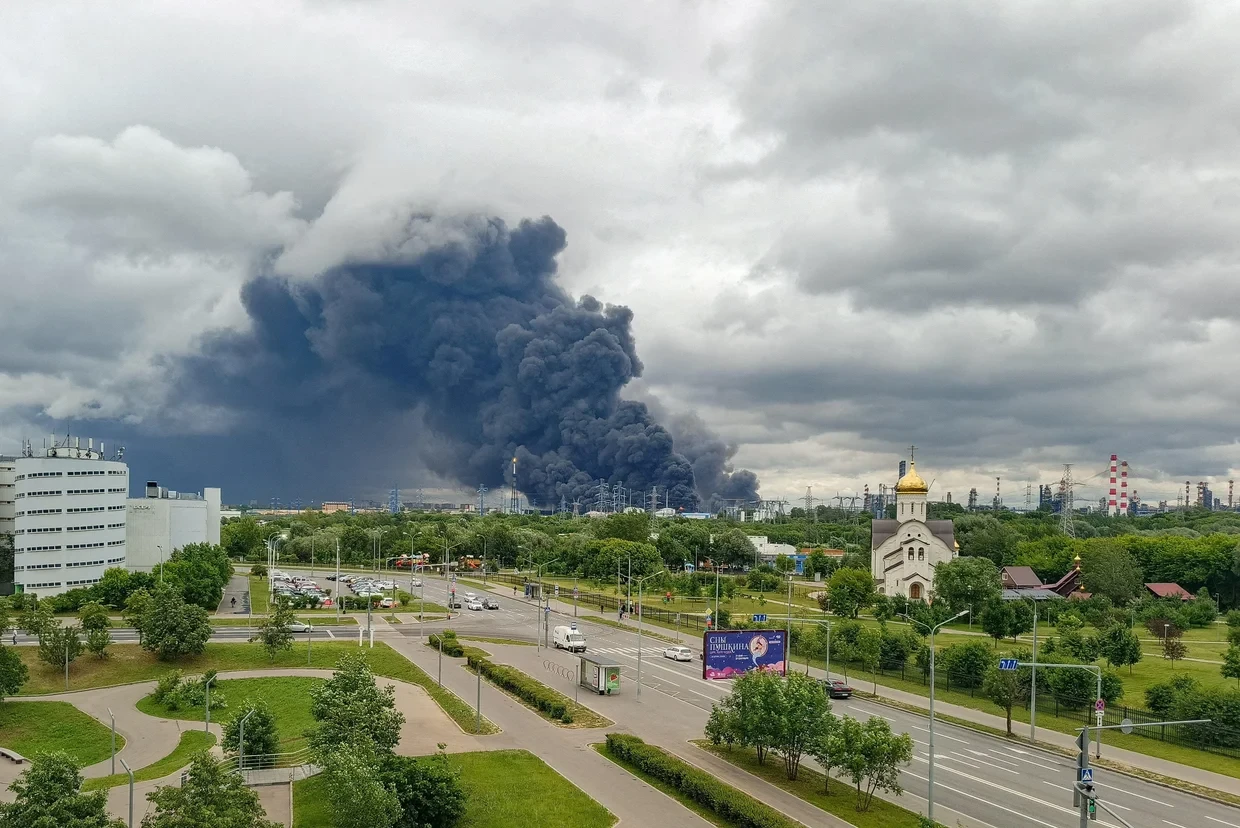
The recent Ukrainian drone attack on Moscow the largest of the war represents not merely a tactical escalation but a deliberate strategic campaign designed to alter the cost-benefit analysis of Russia's war effort by targeting its economic and psychological resilience. The attack, which struck the Moscow Oil Refinery for the second time in a week and forced the temporary closure of four major airports, underscores a calculated shift in Kyiv's military doctrine.
Ukrainian President Volodymyr Zelenskyy framed the strikes as a direct consequence of Russia's continued aggression, stating in a message to reporters that "if Ukraine burns, your Moscow will burn". This rhetoric is rooted in a tangible operational objective: to make the war an unavoidable reality for ordinary Russians. The consequences of the campaign extend beyond political messaging.
The attack on the Moscow refinery, which accounts for more than a third of the fuel market in the capital region, caused massive fires and even led to reports of an oily "black rain" falling on the city's southeast, raising environmental and health concerns among residents. Strategically, the objective is to sever the financial arteries of Moscow's war machine. Targeting oil facilities directly impacts Russian state revenues and creates domestic fuel shortages.
Reports indicate that Ukraine's sustained campaign has already disabled a significant portion of Russia's refining capacity, leading to rising gasoline prices and widespread public anxiety about fuel availability. As one analyst noted, the goal is to "bring the war home" in a way that creates a split in Russian society and inflicts direct economic damage. This military pressure runs parallel to diplomatic efforts. The attack occurred hours after Zelenskyy held what he described as an "important coordination call" with U.S. President Donald Trump and French President Emmanuel Macron.
At the G7 summit in France , leaders including the U.S. pledged continued support for Ukraine, underscoring that the diplomatic and military tracks are now intertwined. While European nations have become the largest suppliers of aid, the U.S. has maintained a crucial, if sometimes strained, partnership.
The drone campaign also reveals an evolving technological dynamic. Ukrainian officials have stated that Russia is facing shortages of key interceptor missiles, a vulnerability attributed to Kyiv's advances in drone production and tactics. By overwhelming air defenses with hundreds of drones, Ukraine is demonstrating its capability to penetrate even heavily protected areas, raising questions about the invulnerability of the Russian capital.
Ultimately, this is a war of attrition waged on multiple fronts. The strikes are designed to force Russian President Vladimir Putin to calculate that the domestic costs of the war economic disruption, environmental damage, and the fear of living under attack now outweigh any perceived battlefield gains.
As Ukrainian Foreign Minister Andrii Sybiha pointedly remarked to the residents of Moscow: "Your country started a war of aggression against ours. Now that you know what's going on, ask Putin when he is planning to end it"